
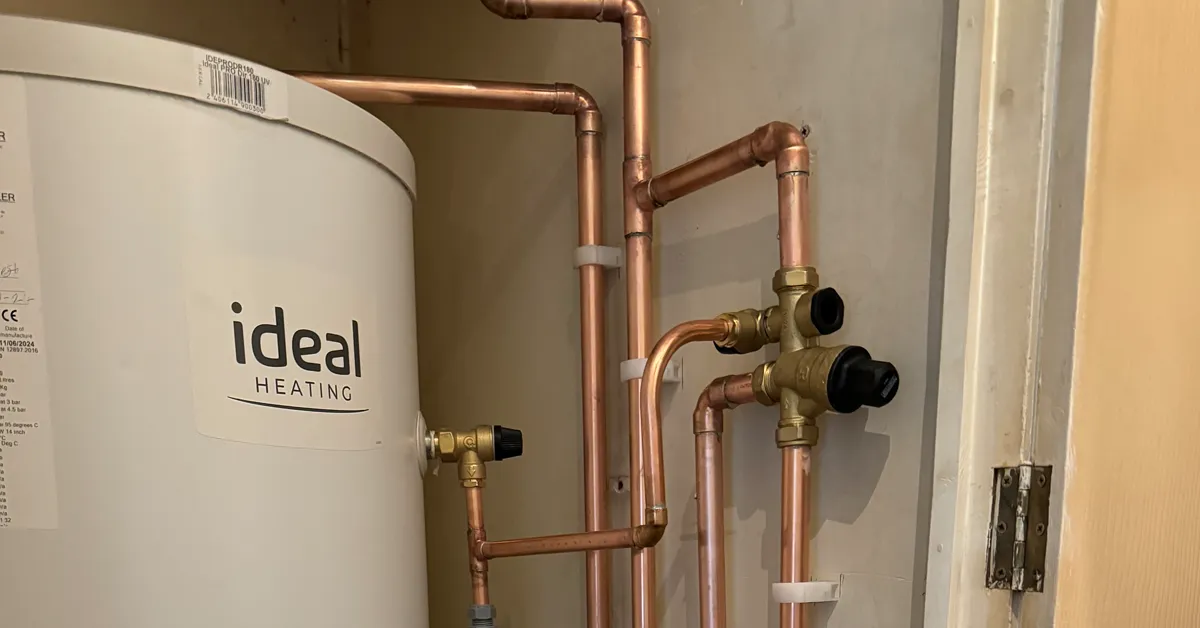
What Is an Unvented Hot Water Cylinder & Do You Need One?
Not sure if you need an unvented hot water cylinder? HOCU explains what they are, how they work, and whether a replacement or upgrade makes sense for your Kent home.
Vented vs Unvented - What's the Difference?
Traditional vented cylinders rely on a cold water storage tank, usually in the loft, to feed the system using gravity. They're common in older Kent properties and work adequately, but they come with limitations, including low pressure, slower recovery, and additional space taken up by the tank itself. Unvented cylinders connect directly to the mains water supply. No loft tank required. The result is mains-pressure hot water delivered consistently to every tap, shower, and bathroom in the property. For homes with more than one bathroom, or where water pressure is a daily frustration, the difference is immediately noticeable.
The Real Advantages of an Unvented System
Upgrading to an unvented cylinder isn't just about hot water pressure. The benefits extend across the whole system:
- Mains-pressure hot water - consistent flow to every outlet, regardless of how many are running simultaneously
- No loft tank required - frees up space and removes the risk of tank leaks or frost damage in colder months
- Faster recovery - water reheats more quickly after heavy use, reducing waiting time between baths or showers
- Compatible with solar thermal - unvented cylinders work efficiently alongside renewable energy sources for homeowners thinking ahead
- Cleaner installation - without a header tank or complicated pipework runs, the overall system is neater and easier to maintain
When Does a Cylinder Need Replacing?
Cylinders don't fail dramatically, they deteriorate gradually. The signs are easy to miss until the problem becomes unavoidable:
- Age over 15 years - efficiency drops and the risk of failure increases significantly
- Lukewarm water - the cylinder is struggling to maintain temperature consistently
- Slow hot water recovery - taking too long to reheat after use, even with normal demand
- Visible corrosion or leaks - around the unit, pipework connections, or pressure relief valve
- Frequent pressure issues - loss of pressure or intermittent flow across the property
Is Your Home Suitable for an Unvented Cylinder?
Most modern Kent properties are. The key requirement is adequate mains water pressure, generally a flow rate of at least 20 litres per minute. A heating survey will confirm this quickly. Unvented cylinders must also be installed by a qualified engineer holding the relevant G3 Unvented qualification. At HOCU, all our engineers carry the appropriate certification, and every installation is completed to current building regulations with the correct safety controls fitted as standard.
Considering an Upgrade? Start With a Survey
The best way to know whether an unvented cylinder is right for your home is a proper assessment, not a generic online calculator. HOCU carries out heating surveys across Maidstone, Tonbridge, Sevenoaks, West Malling, and the wider ME and TN postcode areas. We assess your current setup, confirm suitability, and provide a clear quote with no pressure and nothing hidden. Get in touch to book your heating survey and find out whether an unvented cylinder upgrade makes sense for your property.
Frequently Asked Questions
An unvented cylinder stores and heats hot water fed directly from the mains supply, unlike traditional vented systems that rely on a loft tank. The result is mains-pressure hot water delivered consistently throughout the property without needing a header tank or gravity-fed pipework.
A well-maintained unvented cylinder typically lasts between 20 and 25 years. Annual servicing, including checking the pressure relief valve and expansion vessel, is essential to maintain both performance and safety, and is a building regulation requirement.
No. Unvented cylinders must be installed by an engineer holding a current G3 Unvented qualification. It is a legal requirement under building regulations. All HOCU engineers carry the appropriate certification and every installation is completed to current standards with the correct safety controls in place.
Costs vary depending on the cylinder size, brand, and whether additional system work is required. Most residential replacements in Kent fall between £1,500 and £3,000 fully installed. HOCU provides a clear, itemised quote following a heating survey with no estimates and no surprises.
In most cases, yes, significantly. Because unvented systems deliver hot water at mains pressure, showers and taps benefit from consistent, strong flow. Homes previously relying on a gravity-fed vented system typically notice an immediate and noticeable improvement after upgrading.
Share this article